

At 11:42am on a Tuesday in April, the recycling truck two houses down cycled its compactor twice, and I was sitting bolt upright before I'd even finished waking up, heart going like I'd heard a car crash. It wasn't the truck itself. The truck came every Tuesday, same time, same two-cycle compactor sound, and I knew that going in. What got me every single week was how fast it turned into adrenaline before my brain caught up and told the rest of me there was nothing to actually respond to. What finally stopped those jolts was a white noise machine, a small Magicteam unit.
I spent eleven years producing an overnight radio show, which put my actual sleep somewhere between 9am and 4pm, in a west-facing second-floor bedroom on a street that never really quieted down during the day. I'd made peace with the daytime traffic noise years earlier, the steady hum of cars passing under the window. What I never made peace with were the sounds that weren't steady at all, the ones that showed up once and were gone before I could brace for the next one.
The recycling truck was the worst offender because it was predictable and I still couldn't get used to it. But it wasn't the only one. The elementary school two blocks over let out at 3:15, right in the last hour I actually needed, and for about ten minutes the sidewalk out front turned into a hundred kids yelling at once. A neighbor's dog had opinions about the mail carrier most afternoons. A delivery van's backup beep would cut through everything else and yank me from whatever depth of sleep I'd managed to reach. None of it was loud in an absolute sense. It was the suddenness of it, a spike against quiet, that did the damage.
I tried foam earplugs first, which blunted the traffic hum but did almost nothing for a sharp, sudden sound like a compactor cycling or a dog's first bark. I tried an oscillating fan pointed at the window, which helped a little and also meant waking up cold half the time depending on where it had rotated to by the time I fell asleep. I hung heavier curtains, which did more for the afternoon sun than for anything coming through the glass itself. Every fix I found addressed a hum. Nothing addressed a spike.
A sound engineer I worked with at the station, someone who spent years thinking about frequencies for a living, asked once why I didn't just use a white noise machine instead of stacking fixes that only ever handled half the problem. I told him I figured it was the same idea as the fan, a gadget with a nicer name. He said the difference was that a fan makes one kind of sound and a real white noise machine is built to sit underneath everything else and swallow it whole.
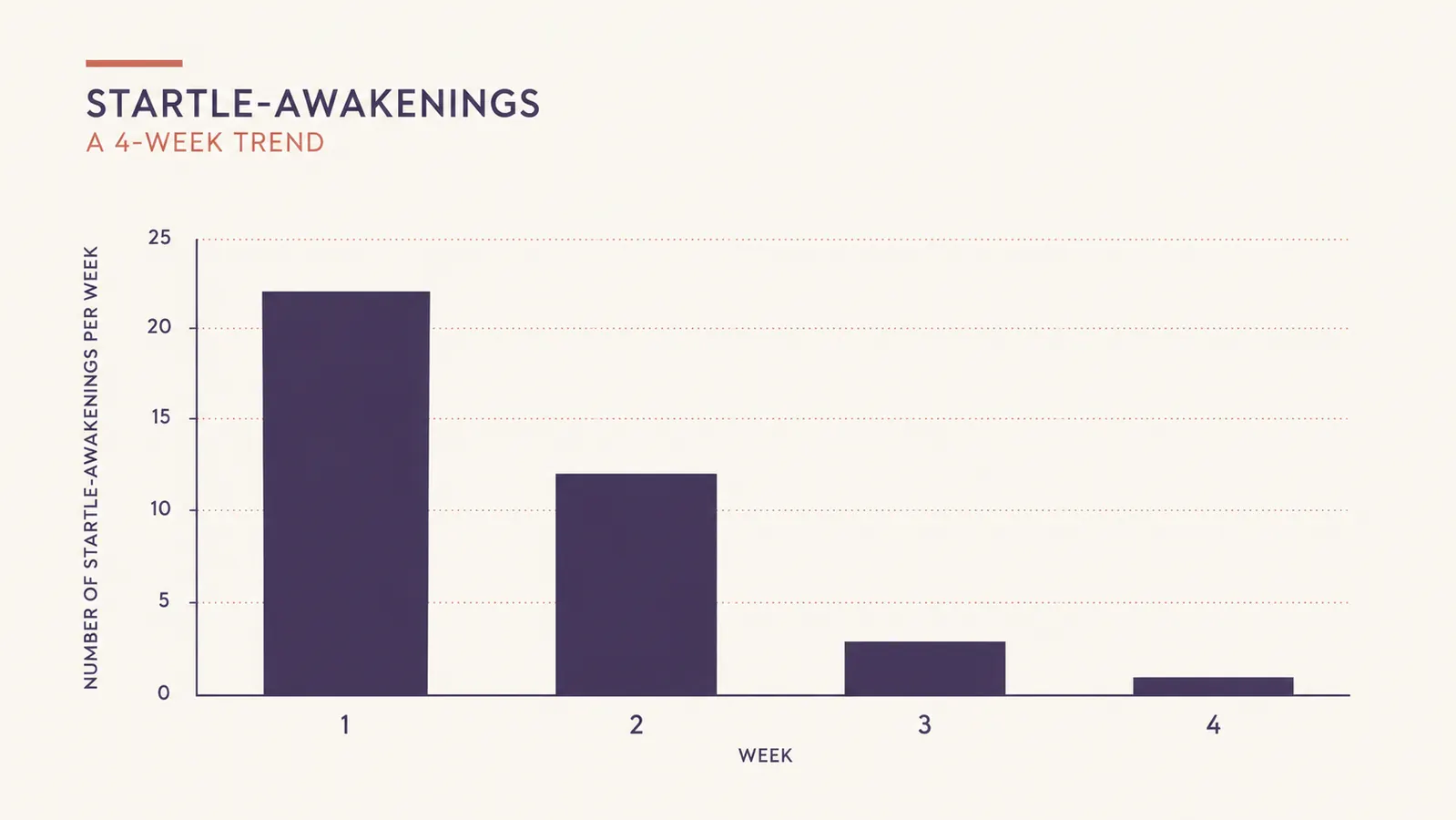
The truck still came at 11:42 every Tuesday. I stopped being able to tell you exactly when, because I'd stopped waking up for it.
The machine that swallowed the compactor truck before it ever reached me
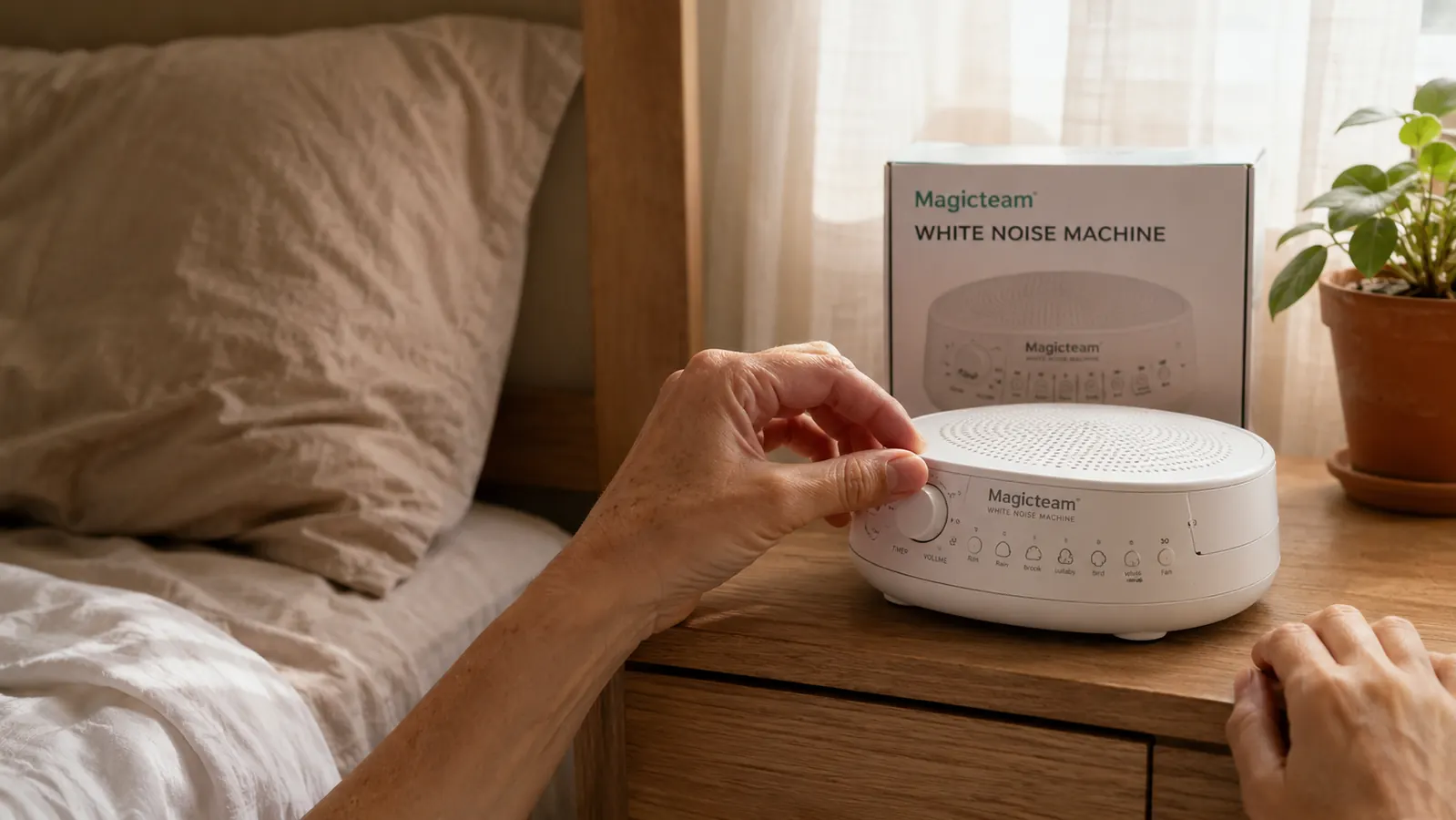
The <a href="/magicteam-white-noise-machine-review-long-term">Magicteam white noise machine</a> runs 20 non-looping sounds and a memory function that saves the exact volume and sound I land on, so I'm not fumbling with settings at noon in a half-asleep haze. It's the one device that's stayed on my nightstand since.
Amazon Check Today's Price on Amazon →The first afternoon I used it, I ran through a few of the twenty sounds before settling on a steady static-like white noise rather than any of the ocean or rain options, mostly because I wanted something with no rhythm at all for my brain to notice. I turned it up until the traffic hum outside disappeared into it completely, then a notch past that. It felt like too much at first, loud enough that I almost turned it back down out of habit before I stopped myself.
That Tuesday the recycling truck came at its usual time. I know because I checked the clock afterward out of curiosity, not because anything woke me for it. The compactor cycled twice, same as always, and it simply didn't reach me the way it had every week before. The machine didn't get rid of the sound. It sat underneath it and around it, thick enough that a sudden spike had nothing left to spike against.

Over the next few weeks I started keeping a rough list on my phone of what still got through and what didn't. The dog barking, mostly gone. The delivery van's backup beep, still occasionally noticeable but nowhere near the full-body jolt it used to be. The school dismissal at 3:15 took the longest to fully disappear into the noise, probably because it's more voices than a single tone, but even that faded from a jolt to something I only half-registered. The memory function meant I never had to rebuild those settings from scratch, which mattered more than I expected on the days I was too tired to think about a dial.
I've written a longer piece on exactly how I dialed in the right volume and sound for a room like mine, plus a separate walkthrough on blocking out noise specifically, if you want the mechanics rather than just the story of the truck.
What I'd Tell You If We Were Sitting at My Kitchen Table
If you're the one sitting up at whatever hour a garbage truck or a school bell happens to fall in your day, I'm not going to tell you a white noise machine erases every sound you'll ever hear again. The really loud, really close ones still get through on some days. What it did for me was take the sounds that used to arrive like an alarm and turn them into something my body didn't feel obligated to respond to. If you've already tried the earplugs and the fan pointed at the window and you're still bolt upright over a truck that comes at the same time every single week, a machine built specifically to sit underneath that kind of sound is worth trying before you decide the noise is just something you live with. It wasn't, for me.
Still bracing for the same truck every week?
The Magicteam white noise machine is the one change that actually stopped the jolt for me, and it's still the first thing I recommend to anyone describing their afternoons the way I used to describe mine.
Amazon Check Today's Price on Amazon →