

I spent eleven years producing an overnight radio show, which meant my actual bedtime was somewhere around 9am and my alarm went off at 4pm. My bedroom faces west, on the second floor, so the afternoon sun comes straight through the blinds while I'm trying to fall asleep, and the street below is running full daytime traffic the whole time. Trash trucks, delivery vans, a neighbor's leaf blower right on schedule. None of that pauses because I need to sleep. The Magicteam white noise machine is the piece of gear that made those hours workable, and after years of running it every single day, here are the ten things it actually does.
None of these ten reasons is complicated, and that's kind of the point. A sleep aid that works during hours nobody else keeps quiet for doesn't need to be clever. It needs to be consistent, boring in a good way, and still doing the same job at hour five as it was at minute one. That's the bar I judged it against, not whether it had a fancy app or a dozen features I'd never touch.
Your Sleep Schedule Doesn't Match the World Outside Your Window
If you're trying to sleep through hours when everyone else is awake and moving, fighting the noise never works. Matching it does. This is the machine I reach for first, and it's the one my whole list below is built around.
Amazon Check Today's Price on Amazon →It Masks the Noise You Can't Predict, Not Just the Noise You Expect
A quiet room isn't actually quiet. It's a room where nothing has interrupted you yet. Daytime traffic doesn't arrive on a schedule the way a nightly street sweep might, it's a garbage truck at 9:15, a car alarm at 11, someone's dog at noon. A steady layer of sound raises the floor so those spikes don't stand as far above it. The truck still happens, the alarm still goes off, but neither one lands as the single loudest thing that's happened in the last hour, and that's the difference between waking fully and barely stirring.
The Non-Looping Sounds Don't Give Your Brain a Seam to Wait For
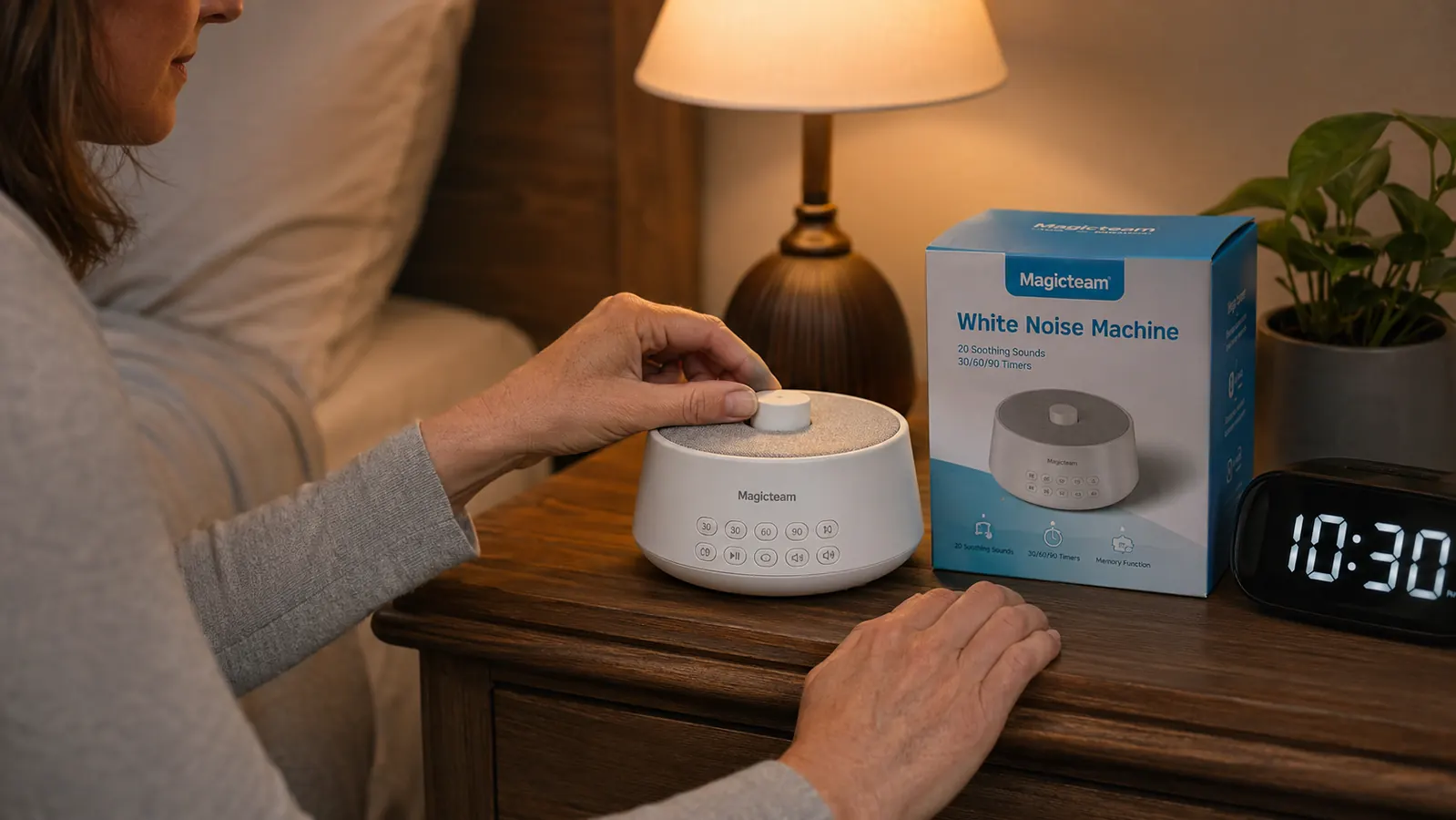
Cheaper machines loop a few seconds of sound over and over, and after enough repetitions your brain starts anticipating the seam, which is its own kind of alertness. The Magicteam runs 20 sounds that are recorded long enough not to obviously repeat, so there's nothing rhythmic to lock onto. It just sits there as texture instead of a pattern you start tracking without meaning to, which matters a lot more over a six-hour stretch than it does in the first ten minutes.
Memory Function Means You're Not Rebuilding Your Setup Half Asleep
After a power blip or an unplug for vacuuming, most machines forget everything and reset to some default chime. This one remembers the last sound and volume you had running, so getting back into bed doesn't turn into a fumbling five-minute decision about which ocean setting you liked best. Small thing, but at 9am with the sun already up and my eyes barely open, small things matter more than they should.
Consistent Sound Teaches Your Brain to Stop Flagging Ordinary Noise
Part of what keeps you half-awake through a noisy sleep period isn't the volume of any single sound, it's your brain checking each new noise to see if it matters. A steady background layer gives it something constant to measure everything else against, and over weeks of consistent use, ordinary daytime sounds stop registering as something worth waking up for. That's habit, not magic, but it's a real and durable habit that took me about three weeks to notice was even working.
It Covers More of the Noise Spectrum Than a Box Fan Ever Will
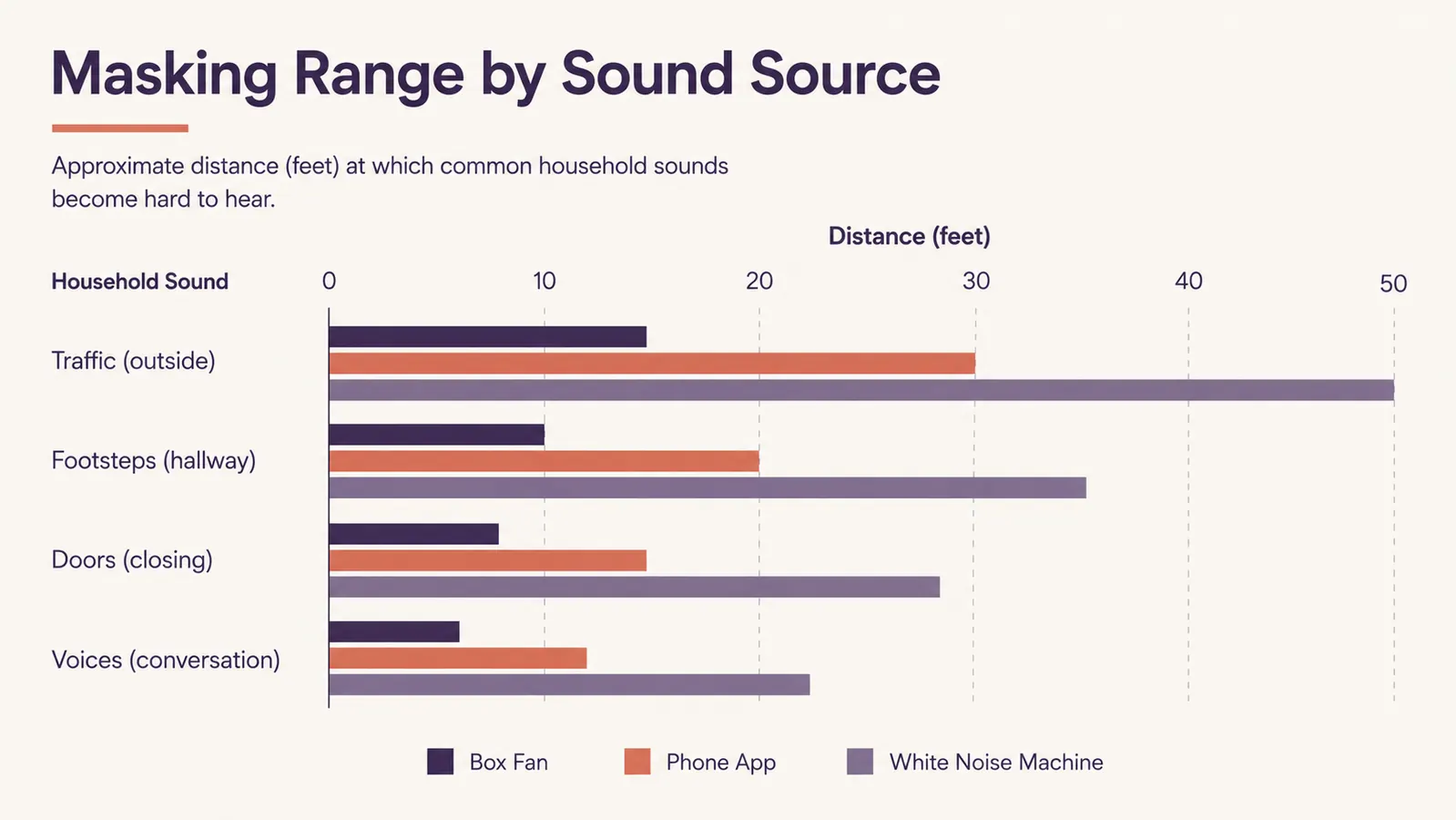
A fan gives you one frequency band and that's it. Twenty different sound profiles, from deep rain to higher static, means you can actually match the machine to whatever's leaking through your window that particular week. When my street switched from quiet weekday traffic to a summer of construction two doors down, I changed sound settings instead of buying new gear, and it covered the difference well enough that I never had to think about upgrading. If a single machine isn't cutting it and you're stacking other fixes on top, here's the full walkthrough on blocking out noise with a white noise machine, room by room.
No Screen, No App, No Light Right Before You're Trying to Fall Asleep
This is a dial and a button. No phone pairing, no app notification lighting up the room at the exact moment you've finally gotten comfortable. If you're already trying to fall asleep at a time your body doesn't fully believe is bedtime, the last thing you need is a blue-lit screen convincing it you're right to be awake. Simple controls you can operate half-blind matter more here than any smart feature would.
It's Gentle Enough to Run in a Room With Someone on a Different Schedule
My husband works a normal 9-to-5, so plenty of mornings he's getting ready for work while I'm trying to fall asleep two feet away. The lower volume settings sit under normal room noise without being jarring to someone who's wide awake, which matters more than any spec sheet when you're sharing a bedroom with someone on the opposite clock. Neither of us has to compromise our own morning routine around the other's night.
You Can Run It for Hours Without It Becoming Its Own Distraction
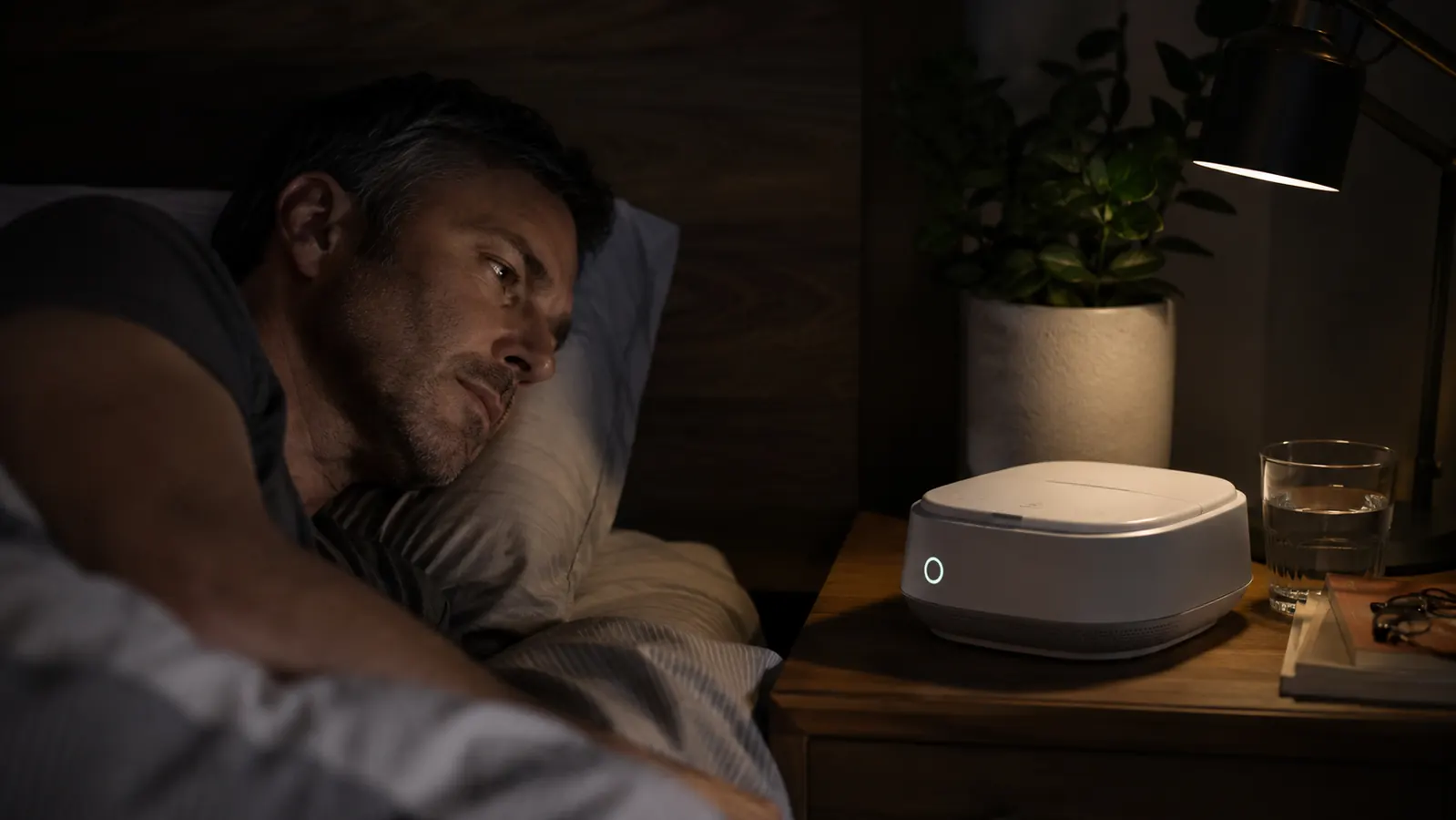
I'm typically asleep for six or seven hours in the middle of the day, which is a long stretch for any sound to hold up without getting repetitive or grating. Between the non-looping tracks and the option to switch sounds mid-sleep without waking fully, it holds up across a full daytime sleep block the way a lot of cheaper machines don't, and I've never woken up annoyed at the sound itself the way I have with some phone apps.
It's Small Enough to Move Wherever Your Sleep Actually Happens
Some weeks I fall asleep in the bedroom, other weeks I end up napping on the couch downstairs between shifts. It's compact enough to carry from room to room without any real setup, plug it in, pick a sound, done. That flexibility matters more when your sleep schedule doesn't sit still, since the last thing you want mid-nap is to be stuck fighting kitchen noise with nothing to cover it.
It's Cheap Enough That You Won't Overthink a Second One
At its current price, it's not a purchase you have to deliberate over. I keep one in the bedroom and eventually picked up a second for downstairs without it feeling like a real financial decision. That matters, because the machines that actually get used are the ones you don't have to ration between rooms, unplugging one to carry it somewhere else at the worst possible moment.
What I'd Skip
I wouldn't expect a white noise machine to fix a room that's still letting in full afternoon sun. It handles the sound half of a daytime sleep problem, not the light half, so I still run blackout curtains alongside it, and I wouldn't skip that step no matter how good the sound coverage is. I'd also skip cranking the volume all the way up as a default. Louder isn't more effective, it just means you've traded one kind of noise for another kind that's now the loudest thing in the room. The lower and middle volume settings do the actual work, and I'd rather add a second sound layer than push one setting past where it's comfortable. For the unfiltered version of what years of daily use with this exact machine actually looks like, including what I'd change, my full long-term review covers those details directly.
The sound doesn't need to be interesting. It needs to be the same, for as long as you're asleep.
Ten Reasons Are Nice, One Machine Is What Actually Matters
You don't need all ten reasons to convince you. You need the sound to still be there at hour six of a daytime sleep block, unchanged, unremarkable, doing its job. That's what this one has done for me since I started using it, and it's still the first thing I plug in whenever my schedule shifts again.
Amazon Check Today's Price on Amazon →