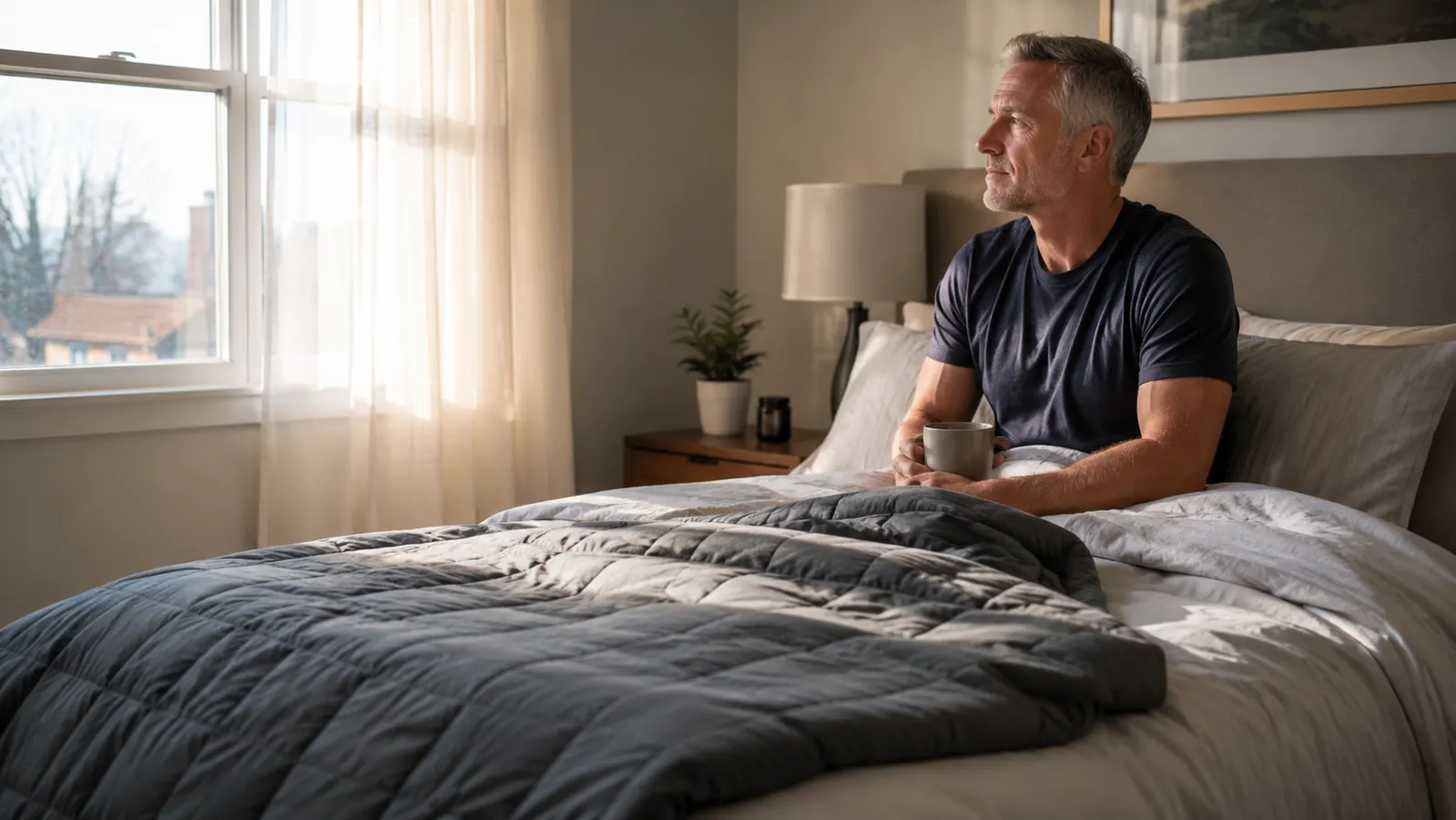
I spent eleven years producing an overnight radio show, which means for eleven years my bedtime was 9am and my bedroom was on the sunny, west-facing side of the house. I'd come home when the street outside was already loud with school buses and lawn crews, pull the shades, and try to convince my body it was midnight while the afternoon sun leaked around the edges of the blinds anyway. I bought the YnM 15lbs weighted blanket almost as a last resort. I'd tried blackout curtains, I'd tried a fan for white noise, and I still lay there some afternoons with my mind racing even though my body was exhausted. Six months later, I still use it every single day I sleep, which in my house means every single afternoon.
This isn't a first-week impression. I've washed this blanket four times, dragged it to a different apartment, and used it through a full range of Florida seasons, including two brutally hot Julys where I questioned whether a weighted blanket and 85-degree afternoons were compatible. Here's what actually happened over that stretch, not what the box promised.
The Quick Verdict
A genuinely well-made weighted blanket that earns its reputation for anxiety and sleep-onset help, with the caveat that it runs warm and the queen size is a two-person carrying job.
Amazon Check Today's Price →Still lying there wide awake at your version of midnight?
Whatever hour your body is trying to shut down, a 15lbs weighted blanket is one of the few sleep aids that works the same night you try it. Check today's price on Amazon before you talk yourself out of it again.
Amazon Check Today's Price on Amazon →How I've Used It
I ordered the 15lbs queen size for my own 138-pound frame, going slightly above the usual '10% of body weight' guidance because I wanted the pressure to be unmistakable, not subtle. It arrived vacuum-sealed and needed about two days spread flat on the guest bed to fully relax back into shape. The first night, I underestimated how disorienting real weight feels if you've never used one. It took maybe twenty minutes to stop noticing it was there and start noticing how still my legs had gone.
My routine hasn't changed much in six months. I get home around 8:30am, do the usual things, blackout curtains drawn, box fan running for the traffic noise outside, and I'm under the blanket by 9 or 9:30. I track roughly how long it takes me to actually fall asleep using nothing more scientific than glancing at my phone clock before I close my eyes and again when I wake up groggy enough to know I was really out. That crude method is still the most honest data I have, and it's the numbers behind the chart below.
For the first two weeks I noticed the weight more than the calm. By week three it flipped, the weight became the thing that told my nervous system 'this is the shutting-down part of the day' the same way a dimmed light or a bedtime routine would for someone sleeping on a normal schedule. I don't have that luxury of dim light in the afternoon, so the blanket became my substitute cue.
I also learned, mostly by trial and error, that consistency mattered more than any single night's setup. On weekends when I'd stay up with friends and try to fall asleep at a more normal 1am instead of 9am, the blanket still helped, but not as fast, since my whole system was already off its usual rhythm on those nights. That told me the blanket amplifies whatever routine you already have rather than replacing the need for one.
The Glass Beads and Why the Weight Feels Different
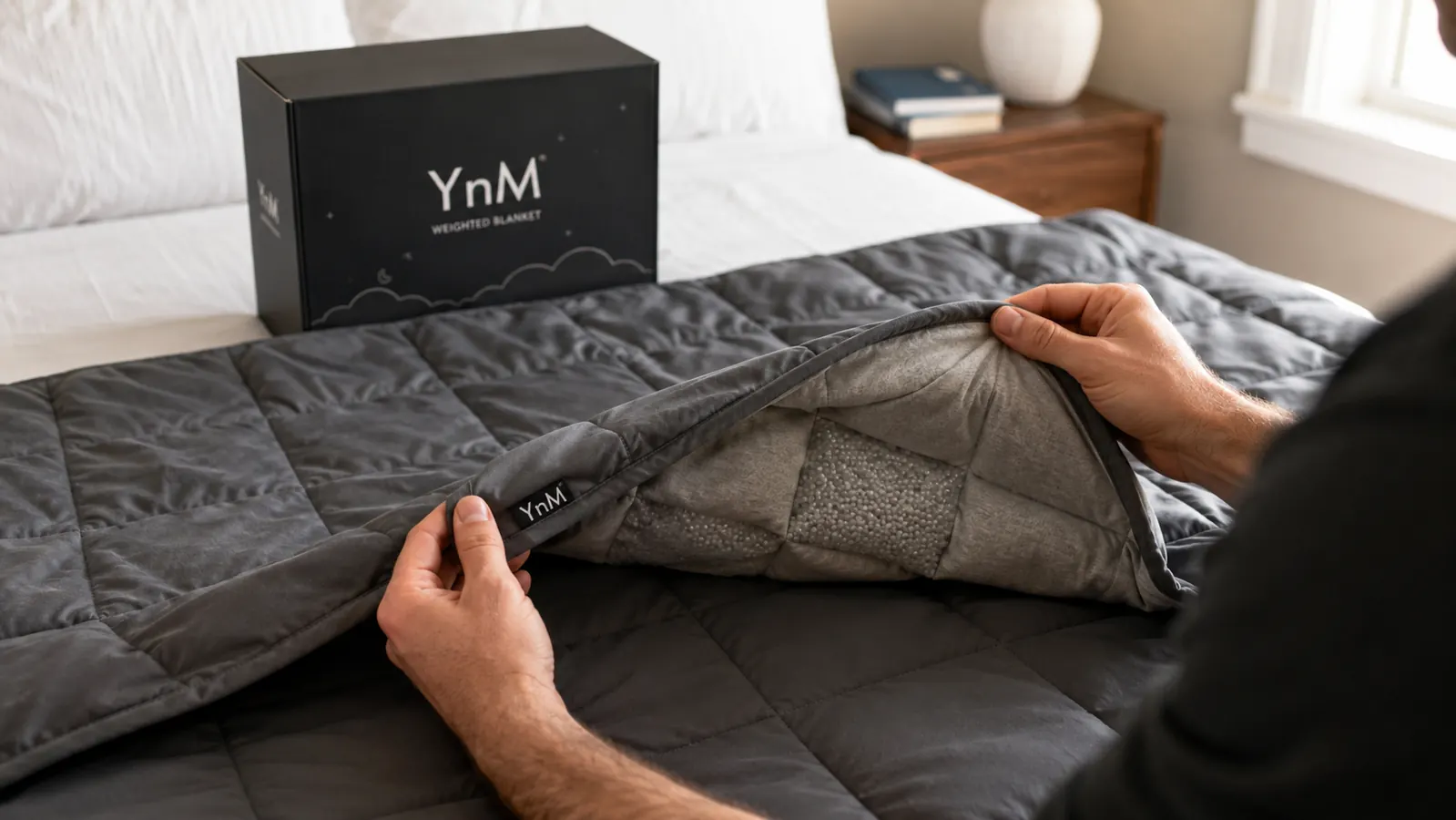
YnM uses fine glass beads sewn into a 7-layer construction with a diamond quilting pattern, rather than the plastic poly-pellets some cheaper blankets use. The difference actually matters. The beads are smaller and denser, so the weight distributes in a fine, almost sand-like way instead of clumping into lumps you can feel through the fabric. On my old blanket from a different brand, years ago, I could feel individual pellets shifting toward my feet by 3am. On the YnM, even after six months and dozens of washes, the diamond stitching has kept the beads locked in their own little pockets. I've never had a corner go heavy or a section go flat.
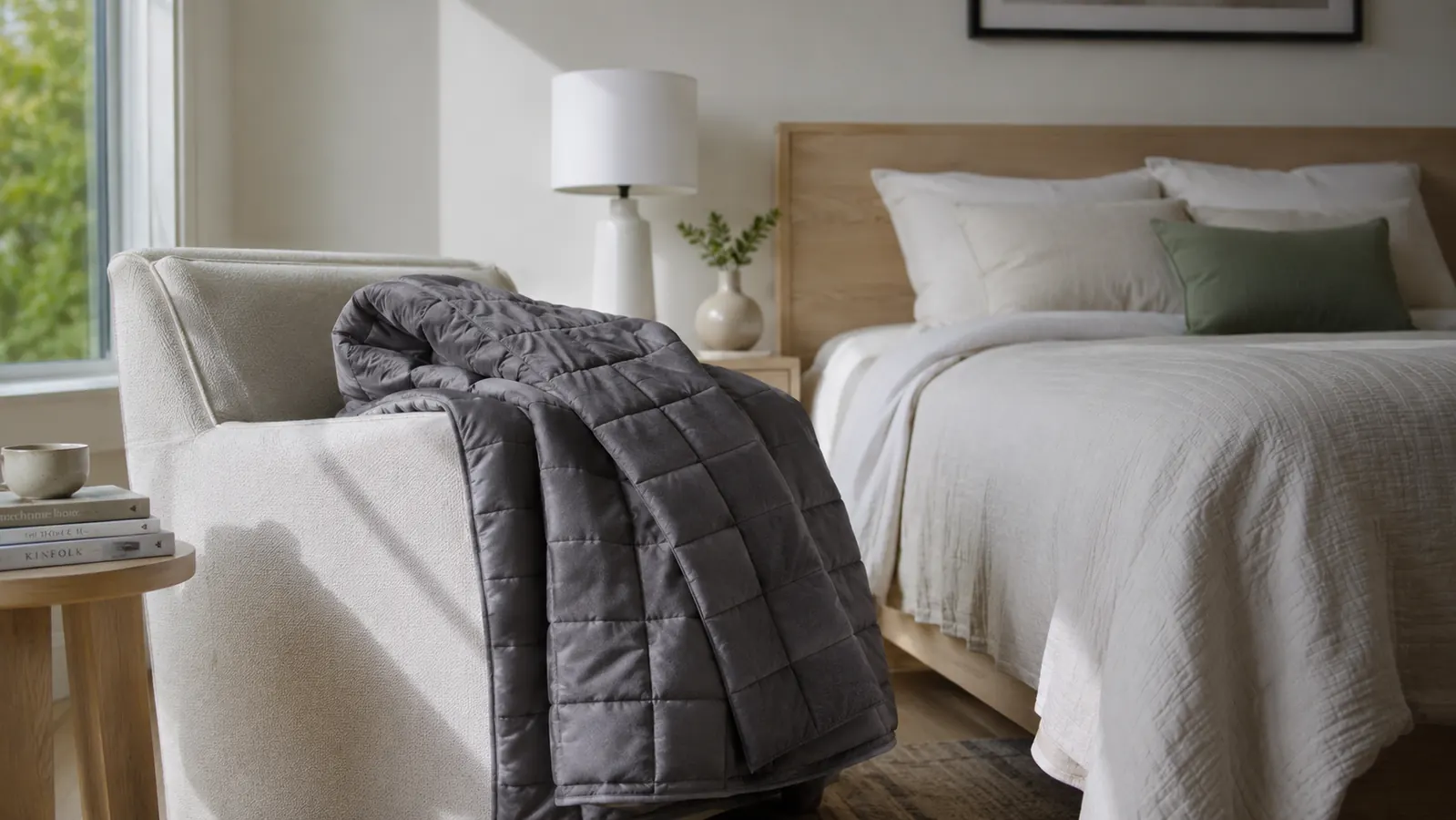
The tradeoff is that glass beads are denser than plastic pellets for the same weight, so the blanket itself is more compact and less bulky than I expected a 15-pound blanket to be. That's a genuine plus for someone like me who folds it over a chair during the two or three hours a day I'm not under it. It doesn't look like a pile of laundry, it looks like a neatly quilted throw that happens to weigh as much as a bag of mulch.
Warmth: The One Real Tradeoff
I have to be honest here because most reviews gloss over this. My bedroom gets direct afternoon sun for roughly three hours before I fall asleep, and the outer cotton shell on this blanket, while breathable compared to minky or fleece versions, still traps more heat than a plain top sheet would. Through last July and August, there were afternoons I woke up sweating around hour four, especially before I switched to running the ceiling fan on a timer for the first two hours.
YnM does sell a cooling version with a different weave, but I bought the standard cotton one, and I'd tell anyone in a hot, sun-facing room to seriously consider the cooling variant instead, or at minimum pair the standard version with a fan. It's not a dealbreaker, it's a planning issue. Once I adjusted my room setup around it, the warmth stopped being a problem and started being a mild plus in the winter months, when my west-facing room cools off fast once the sun moves past it.
I also swapped my duvet cover to a lighter percale weave around month three, which helped more than I expected. Anyone with a heavier top sheet or comforter layered on top of this blanket in a warm room is essentially doubling down on the same problem I had, so simplifying what's underneath is worth trying before assuming the blanket itself is the issue.
Six Months In: What Actually Changed
The honest, unglamorous answer is that my time to fall asleep dropped from somewhere around 35 to 45 minutes in month one to closer to 15 to 20 minutes by month six. That's a gradual conditioning effect, not an overnight fix, the same way any consistent sleep cue works better the longer you stick with it. What surprised me more was daytime anxiety on days I didn't get a full sleep. I noticed I was reaching for the blanket during a rough afternoon even when I wasn't trying to nap, just to sit under it on the couch for twenty minutes with a cup of coffee going cold. That wasn't something I expected to want.
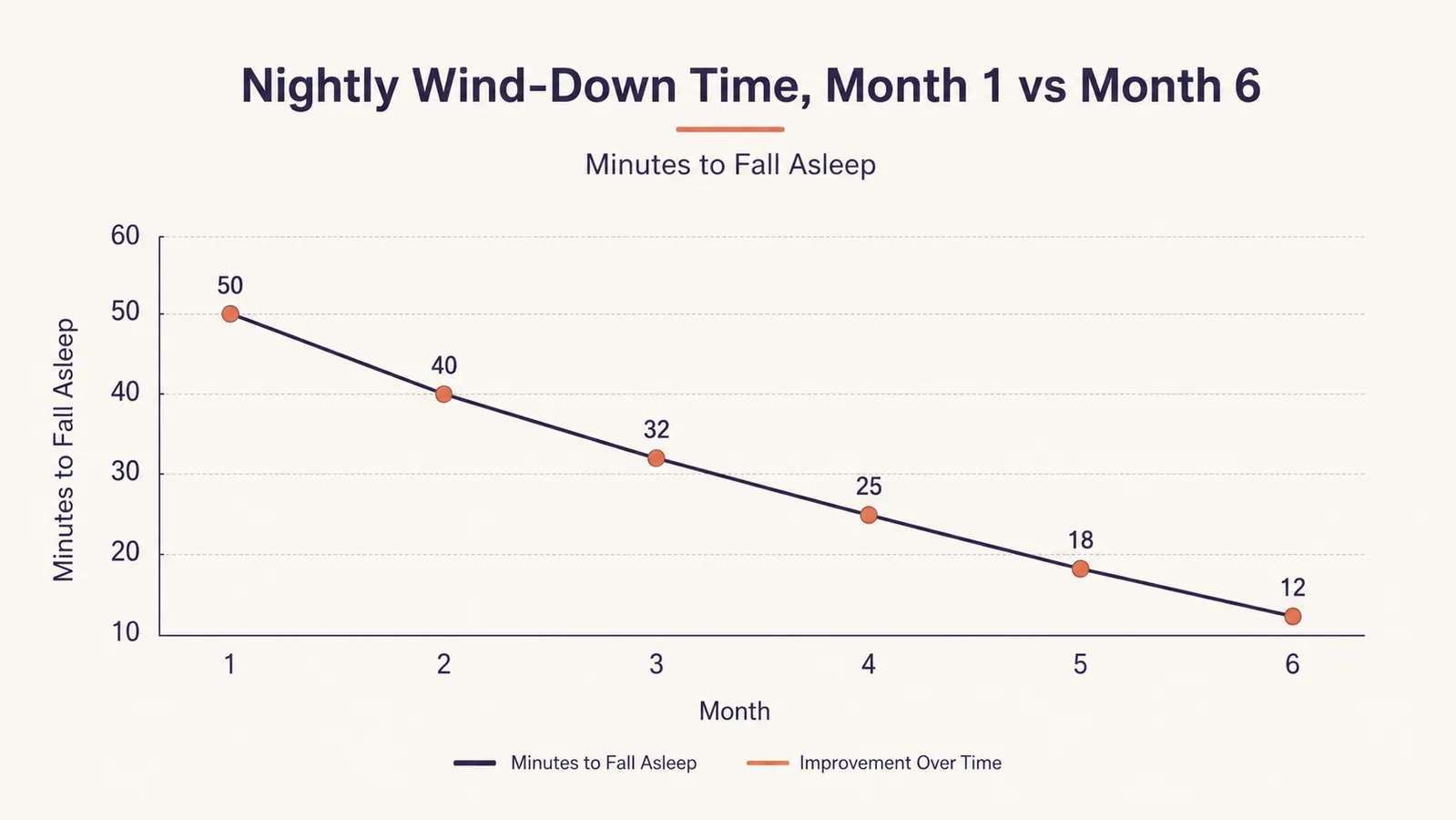
I also noticed fewer of the middle-of-sleep wake-ups where I'd surface, hear a truck outside, and lie there annoyed for ten minutes before drifting back off. I can't prove the blanket caused that specifically, since I also improved my blackout curtain situation around month two, but the timing lines up closely enough that I credit both changes together rather than either one alone.
By month five, the blanket had become such a fixed part of the routine that packing it away for a two-night trip actually made the trip harder to sleep through than the unfamiliar hotel bed did. That's a strange thing to admit about a blanket, but it's the clearest sign I have that whatever is happening isn't placebo fading over time, it's building.
Washing and Durability
I've machine washed this blanket four times on a gentle, cold cycle, then air-dried it flat each time because the care tag warns against high heat warping the inner baffles. It takes a full day to dry completely given the density of the fill, which is the single most annoying logistical part of owning it. Plan your wash day around having a spare blanket for the night, because you will not want to sleep without it once you're used to it, and you cannot rush the drying.
After four washes, I've seen no bead leakage, no seam failure, and no flattening in any section. The outer cotton has softened slightly, which I actually prefer, but the color, a medium grey, hasn't faded noticeably even with regular sun exposure while it airs out on the balcony. I've also checked the corner ties and the removable duvet-style cover seams under a bright lamp a few times out of sheer curiosity, and the stitching still looks factory-tight rather than stressed.
Alternatives I Considered
Before landing on the YnM, I looked seriously at two other routes. One was a much pricier name-brand weighted blanket that a friend swore by, built with a similar glass bead fill but at close to double what I ended up paying for the YnM. Side by side in a showroom, I genuinely could not tell the difference in how the weight sat on me, and the extra cost seemed to be paying for brand recognition and a slightly nicer duvet cover more than any functional gain.
The other option I considered was a lighter, 10lbs version instead of the 15lbs I bought. Given how hot my room already runs in the afternoon, I've wondered if the lighter option would have been the smarter starting point, and it's genuinely the one thing I'd tell a first-time buyer to weigh carefully rather than defaulting straight to the heaviest option available, especially if you already sleep warm or share a bed and don't want your side dramatically heavier than theirs.
Who Else It's Worked For
I've recommended this exact blanket to two friends, one who struggles with generalized anxiety and one who just runs cold and wanted a heavier layer in winter. Both went with the 15lbs queen. My anxious friend reported the same thing I did, a slower but real drop in how long it took to settle down at night. My cold-sleeper friend actually complained about the same warmth issue I ran into, which tells me it's a consistent trait of the standard cotton version rather than something specific to my sun-baked bedroom.
What I Liked
- Glass bead fill stays evenly distributed even after months of washing
- Diamond quilting has held up with zero seam or leakage issues after 4 washes
- Genuinely helped shorten how long it takes me to fall asleep over time
- Compact and neat-looking when folded, not bulky for its weight
- Available in enough weight options to match different body sizes
Where It Falls Short
- Standard cotton version runs warm, a real issue in hot or sun-facing rooms
- Full-day drying time makes wash day a planning exercise
- Queen size at 15lbs is genuinely heavy to move or fold one-handed
- Takes real time, weeks not days, to feel the calming effect build
The weight didn't knock me out on night one. It became the cue that told my body it was time to stop, the same way a dimmed light works for someone who actually gets to sleep when it's dark outside.
Who This Is For
If you deal with racing thoughts at bedtime, sleep on a schedule that fights your body clock, or just want a heavier, calming layer in cooler months, this is a well-built option worth trying at its current price point. It's also a reasonable match if you've been curious about weighted blankets generally but wanted a well-reviewed, mid-price entry point rather than a premium name-brand version.
Who Should Skip It
If you already run hot at night and don't have a fan, AC, or a cooling variant on your list, the standard cotton YnM may fight against you rather than help. Anyone who needs to travel with their blanket regularly should also think twice, 15 pounds isn't something you casually toss in a bag. And if you're looking for an instant fix rather than something that builds over a few weeks, temper your expectations accordingly, that includes reading more on why weighted blankets help with anxiety in the first place before you buy.
Six months later, I still reach for this one first
If your nights (or afternoons) look anything like mine used to, a well-made weighted blanket is worth the trial. Check today's price on Amazon and see the current reviews for yourself.
Amazon Check Today's Price on Amazon →