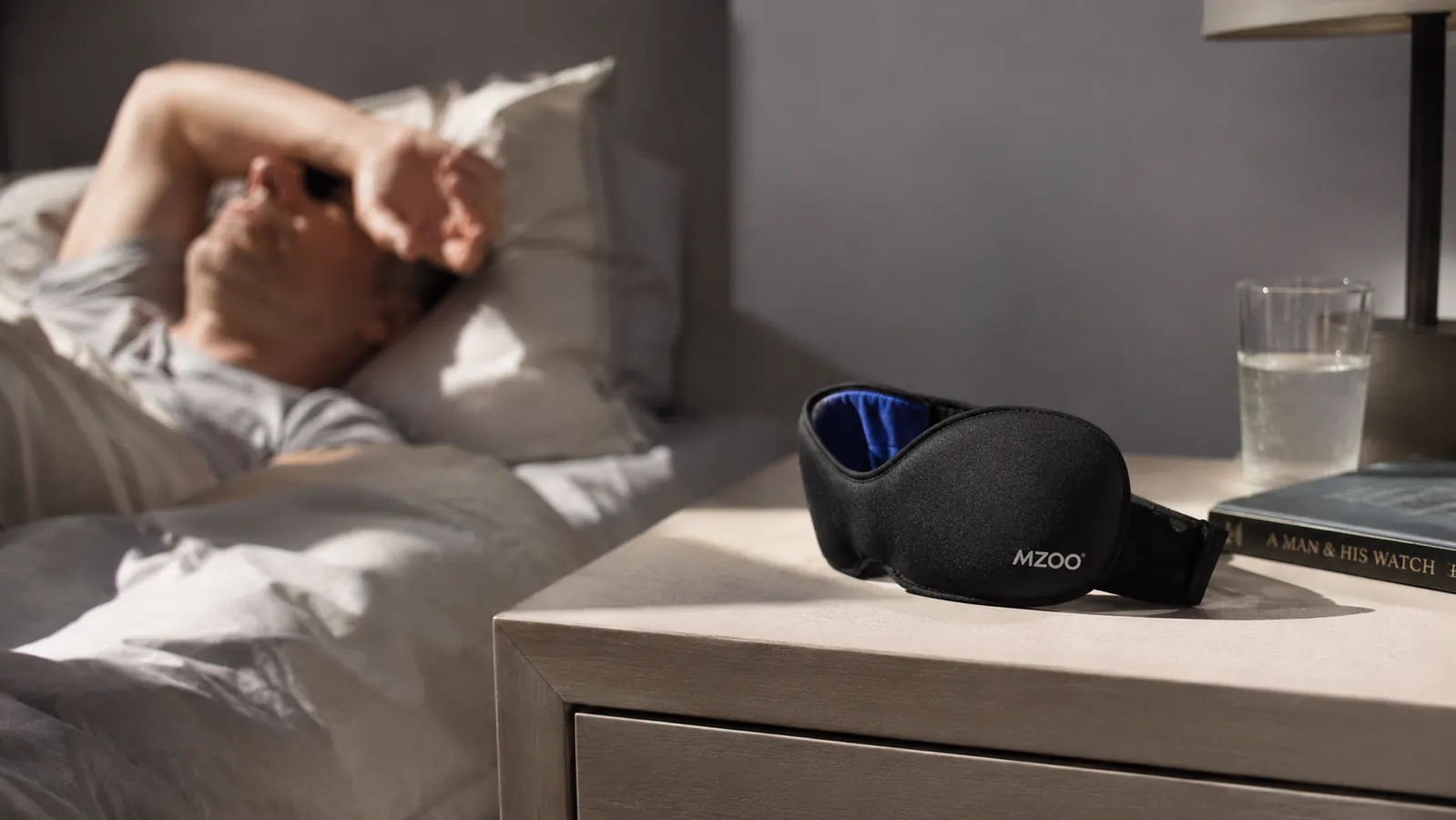
The thing nobody puts in the five-star reviews of the MZOO sleep mask is that "one size fits most" is doing a lot of quiet work in that sentence. I've worn one almost every afternoon for the better part of a year now. Eleven years of producing an overnight radio show has me climbing into bed around 9am and trying to hold onto sleep until 4pm, in a west-facing second-floor bedroom where the sun comes through hard by early afternoon and the street below never really goes quiet. I like this mask. I'm still using it tonight. But if you've read three glowing reviews and are about to click buy assuming it will sit on your face exactly the way it does in the product photos, I want to slow you down for a few minutes first.
Most of what gets written about this mask focuses on how dark it gets and how soft the fabric feels against your skin, and both of those things are genuinely true, I'll get to them. What gets left out, almost entirely, is the fit conversation: the parts that only show up after you've worn the thing every day for weeks, not the five minutes you spend trying it on in a bright store aisle or under a ring light for a product photo. That's what this review is actually about.
The Quick Verdict
A genuinely good light-blocking mask with real fit caveats for smaller heads, narrower faces, and anyone who sleeps hot around the ears. Worth reading past the star rating before you buy.
Amazon Check Today's Price →Before you buy based on the star rating alone
See the current price and scroll the recent buyer photos on Amazon, they show the fit variation across different face shapes far better than any studio shot can.
Amazon Check Today's Price on Amazon →How I Actually Tested This, Beyond "It's Comfortable"
I didn't just wear the mask and note whether it felt nice, which is about as far as most reviews go. I specifically tracked the fit variables, because that's where I'd been burned by other masks before this one: whether the strap held its position at the same notch across consecutive nights, whether the eye cups stayed centered over my eye sockets when I rolled onto my other side mid-sleep, whether the velcro closure caught in my hair on the way off in the afternoon, and whether the seal held once I'd shifted position during the deepest stretch of sleep, which for me tends to land in the last hour or two before my 4pm alarm.
I don't wear glasses, which matters here because a decent chunk of the fit complaints I've read from other buyers come from people trying to wear this over frames, something the mask isn't really built for. I do have a narrower face and keep my hair short, above the shoulder, which turned out to matter more than I expected. Both of those details shaped what I noticed, and I want to be upfront about them so you can weigh whether my experience maps onto your own face shape or not. I also tested it across three full seasons rather than just a couple of weeks, because a mask that feels fine in a cool bedroom in February can feel completely different once the same room is holding onto July heat by 2pm, and the strap material behaves differently against warm, slightly damp skin than it does against cool skin in the winter.
The Sizing Problem the Product Photos Don't Show
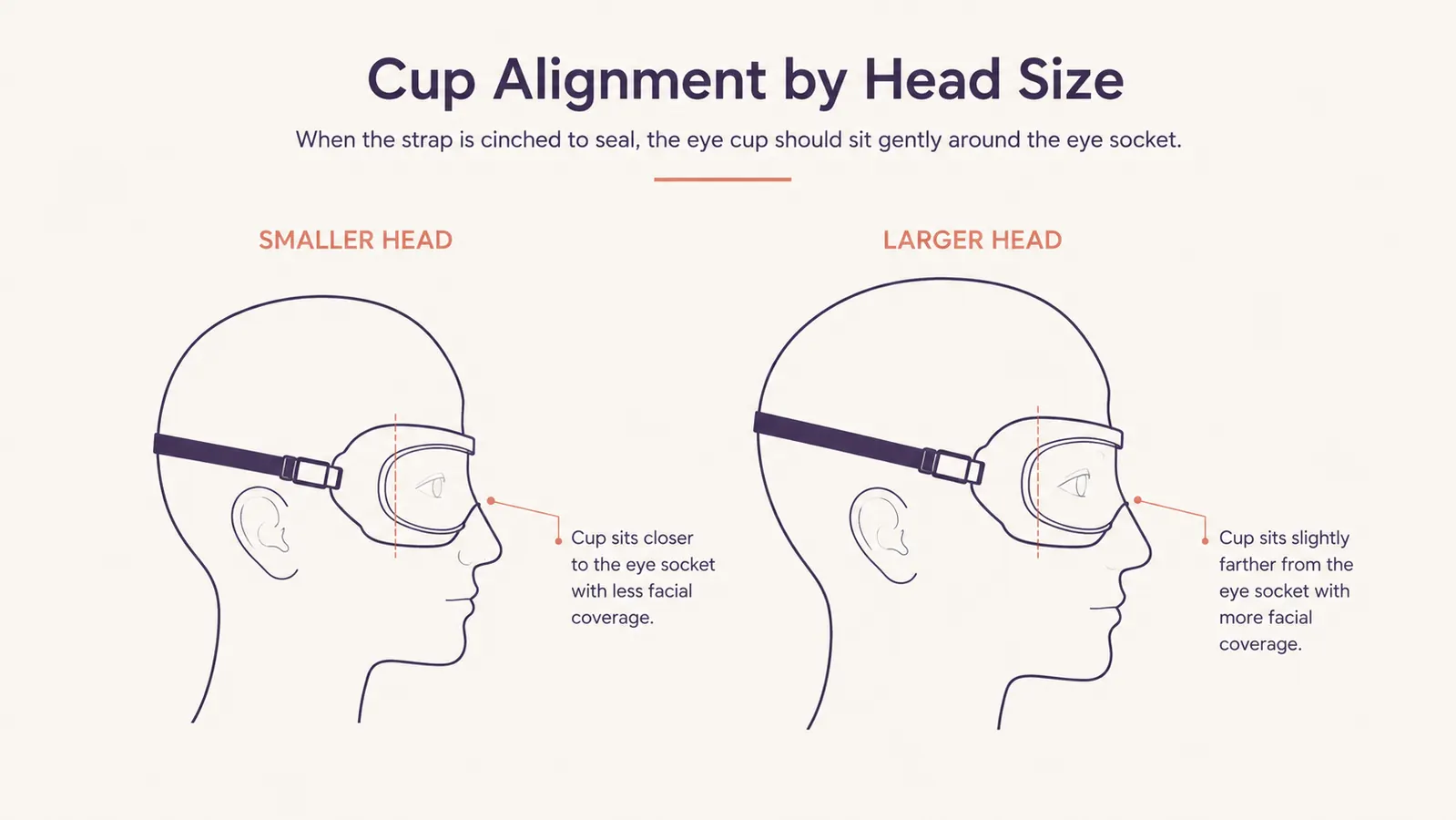
The MZOO ships in one size, adjustable only through a velcro closure on the strap that changes the circumference, not the width or depth of the eye cups themselves. That distinction sounds small until you're the one wearing it. For a narrower face like mine, cinching the strap tight enough to get a full seal against light sometimes pulls the cups very slightly off-center from my eye sockets, so I'm choosing between a perfect seal and perfect alignment rather than getting both automatically. Most nights the gap is small enough that I don't notice it. Some nights, especially if I've adjusted the strap in a hurry half-asleep, I wake up and realize the cup edge has been resting against my brow bone rather than floating clear of it the way it's supposed to. I only figured this out because I keep a rough weekly note of how the mask felt when I woke up, not just whether I fell asleep quickly, and the pattern of "slightly off-center" showed up often enough over a few months that it stopped looking like a fluke and started looking like a structural limit of a one-size design.
For a larger head, the complaint runs the other direction. The strap's maximum opening leaves less margin than you'd want for a full eight-hour stretch of side-sleeping, where the fabric gets pulled and repositioned by the pillow every time you roll over. I don't have this problem myself, but I've read enough buyer feedback with the same specific detail, the strap maxed out and still feeling snug rather than secure, that I think it's worth naming plainly rather than assuming it's a one-off complaint. If fit is the thing you're most worried about before buying, I actually walk through how this compares against a patch-style alternative built around individual adjustment in MZOO vs Manta Sleep mask, since that's the mask I'd point a larger or unusually shaped head toward first.
What "Zero Eye Pressure" Actually Means, and Doesn't
The marketing claim is zero eye pressure, and when the mask is seated correctly, that's true. The 3D cups are genuinely deep enough that the fabric doesn't touch your eyelids, and I can blink freely inside it most nights without feeling anything brush against my lashes. But "correctly seated" is doing real work in that sentence, and it took me a good two or three weeks to learn what that actually meant for my face.
In my first couple of weeks, before I'd worked out the right strap height, I noticed a faint crescent mark under my left eye some afternoons when I woke up, the kind of light indentation you get from sleeping on a seam in your pillowcase. It wasn't painful, but it also wasn't nothing, and it directly contradicts the zero-pressure promise on the box. The fix, for me, was routing the strap higher on the back of my head rather than down near ear level, which changed the angle the cup sat at against my face and stopped the mark from showing up. Nobody tells you that in the marketing copy, and nobody tells you it in most reviews either, because most people either get lucky with their face shape on the first try or give up and return the mask before they figure out the adjustment.
The Velcro Strap Detail That Bugs Me Every Day
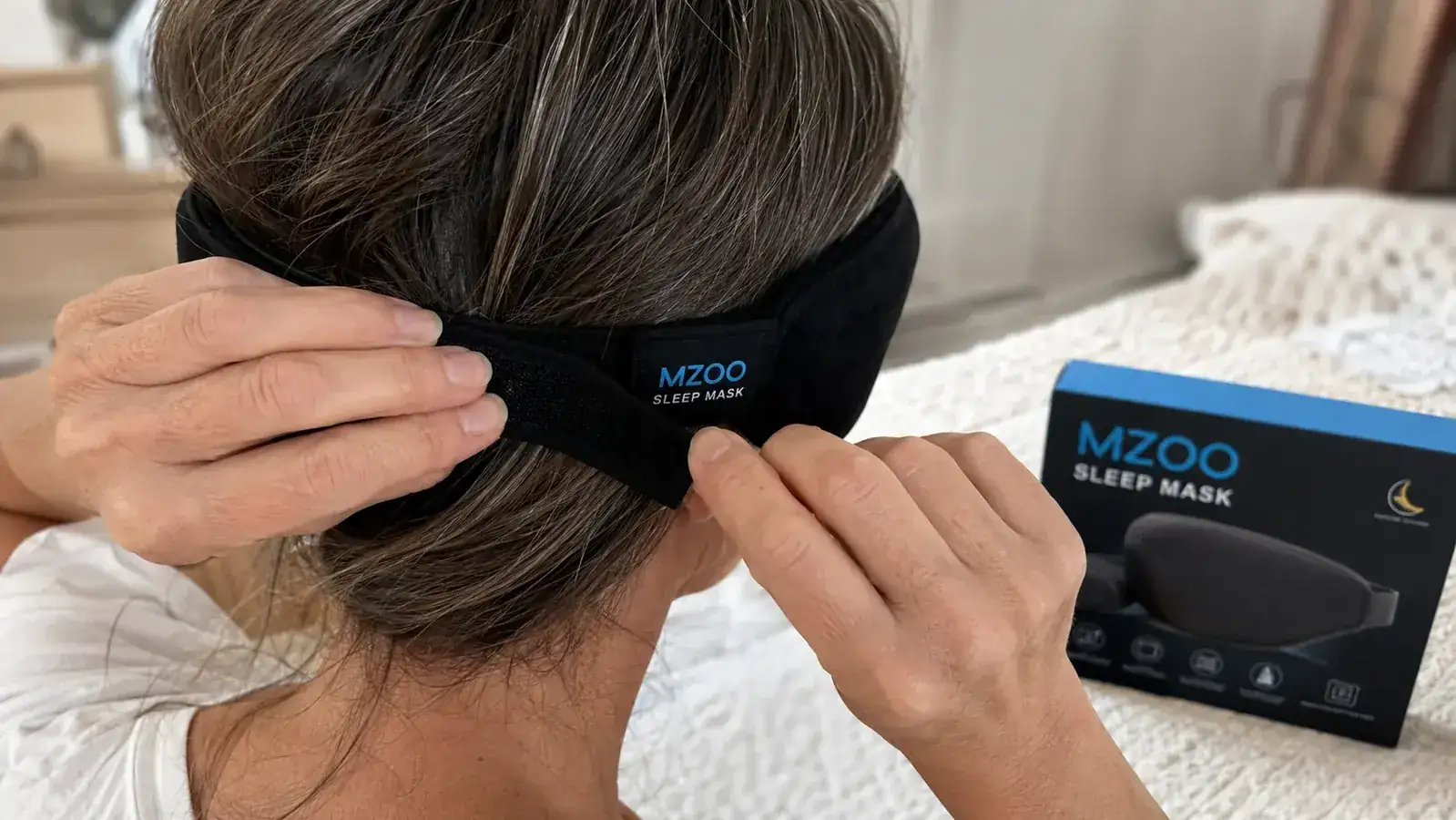
This is the smallest complaint on this list and also the one I notice most often, purely because of how frequently it happens. My hair is short enough that strands catch in the velcro closure almost every time I take the mask off in the afternoon, a quick tug that isn't painful but is annoying enough that I've started holding my hair back with one hand before I pull the mask up and over. If your hair is longer, I'd expect this to be worse, not better, since there's simply more of it in the way of the closure.
The velcro itself also has a slightly scratchy feel against the back of my head on nights when I readjust it mid-sleep, something a softer hook-and-loop material or a buckle closure would solve entirely. It's a minor thing next to the light blocking, which is the mask's whole reason for existing, but it's exactly the kind of daily friction that never makes it into a star rating and absolutely affects how much you enjoy using something every single day for months.
Why the Early Reviews Don't Catch Any of This
Most reviews for a mask like this get written in the first week after it arrives, often within days, because that's when the excitement of a new product is highest and the return window is freshest in your mind. That's exactly the window in which fit problems haven't shown up yet. A mask can feel perfect on night one, when you're paying close attention to the sensation of it and adjusting the strap fresh out of the packaging. It's night twelve, when you've stopped thinking about the mask consciously and your body has settled into whatever position it settles into during actual sleep, that tells you whether the fit is genuinely good or just good enough to survive a first impression.
I wrote my own early notes on this mask after about five days and they read almost entirely positive, no mention of the brow-bone pressure or the off-center cup feeling, because neither had shown up yet. It took closer to three weeks of daily wear before the pattern became something I could describe specifically rather than a vague sense that something wasn't quite right. If you're reading reviews to decide whether to buy this, weight the ones that mention a specific number of weeks or months of use more heavily than the ones posted the week the box arrived. That single filter would have saved me some frustration the first time I bought a sleep mask based on reviews alone.
Where the Marketing Held Up, and Where It Didn't
I want to give credit where it's due, because an honest review has to go both ways. The light-blocking claim held up completely. In a room where the afternoon sun comes straight through a west-facing window, this mask blocks it as fully as anything I've tried, and that's the single hardest problem to solve for someone sleeping on a schedule like mine. The breathable fabric claim also held up, I don't wake up with a sweaty face the way I did with a shinier synthetic mask I tried earlier this year.
The "universal fit" language on the packaging is the one claim that didn't fully hold up for me, and I don't think it holds up evenly across different face shapes based on what I've read from other buyers either. It fits a lot of people well. It doesn't fit everyone equally well, and the packaging doesn't tell you which camp you're likely to land in until you've already opened the box and tried it. I've told the longer version of how I stumbled onto this exact problem, and how I eventually solved it, in the full story of my first month with this mask, if you want the more personal version rather than the checklist version.
What I Liked
- Genuinely blocks direct afternoon sun through a west-facing window
- 3D contoured cups avoid eyelash contact when properly seated
- Breathable fabric doesn't trap heat the way shinier synthetic masks do
- Adjustable strap does offer a workable fit for most face shapes eventually
- Comfortable enough for extended daytime side-sleeping once dialed in
- Holds its cup shape over months of daily use, unlike flatter foam masks
Where It Falls Short
- Strap adjusts circumference only, not cup width or depth, so seal and eye-socket alignment can compete for narrower faces
- Larger heads may find the maximum strap opening tighter than expected for a full night
- Velcro closure catches hair on removal and feels scratchy against the back of the head
- Getting the truly zero-pressure fit took two to three weeks of trial adjustment for me
- Not built to be worn comfortably over glasses
- Fit quality depends heavily on getting the strap height right, which isn't obvious from the box
The nights I got the strap position right, I forgot I was wearing anything. The nights I got it wrong, I woke up with a faint mark under my eye and blamed the mask before I stopped and blamed my own adjustment.
Who This Is For
If you sleep during daylight hours for any reason, an overnight schedule like mine, a rotating shift, or just a bedroom that catches hard morning or afternoon sun, this mask solves the actual problem of light leaking in at the edges better than most masks in this price range. It's also a solid pick if you're willing to spend a week or two experimenting with strap height and position rather than expecting a perfect fit on night one. Average to smaller face shapes without glasses tend to have the easiest time with it, based on both my own experience and what I've seen echoed in other buyer feedback. It's also worth it if you've already been burned by a flat foam mask that flattened out within weeks, since the cup structure here holds its shape far longer even with the fit quirks factored in.
Who Should Skip It
If you wear glasses to bed or need a mask that fits perfectly on the first try with zero adjustment period, I'd look elsewhere before committing to this one. Larger heads or anyone who has struggled with straps feeling maxed-out on other one-size masks should read the fit details closely before ordering, since the complaint pattern here is consistent enough that it's not just bad luck. And if pressure-free fit on an unusual face shape is your top priority over price, a patch-style mask with independently adjustable eye cups is worth the extra look before you settle on this one.
Know the fit tradeoffs going in, not after you've unwrapped it
The light blocking is the best part of this mask, the fit just takes a little patience to get right. Check today's price on Amazon and read the most recent buyer photos before you decide.
Amazon Check Today's Price on Amazon →