
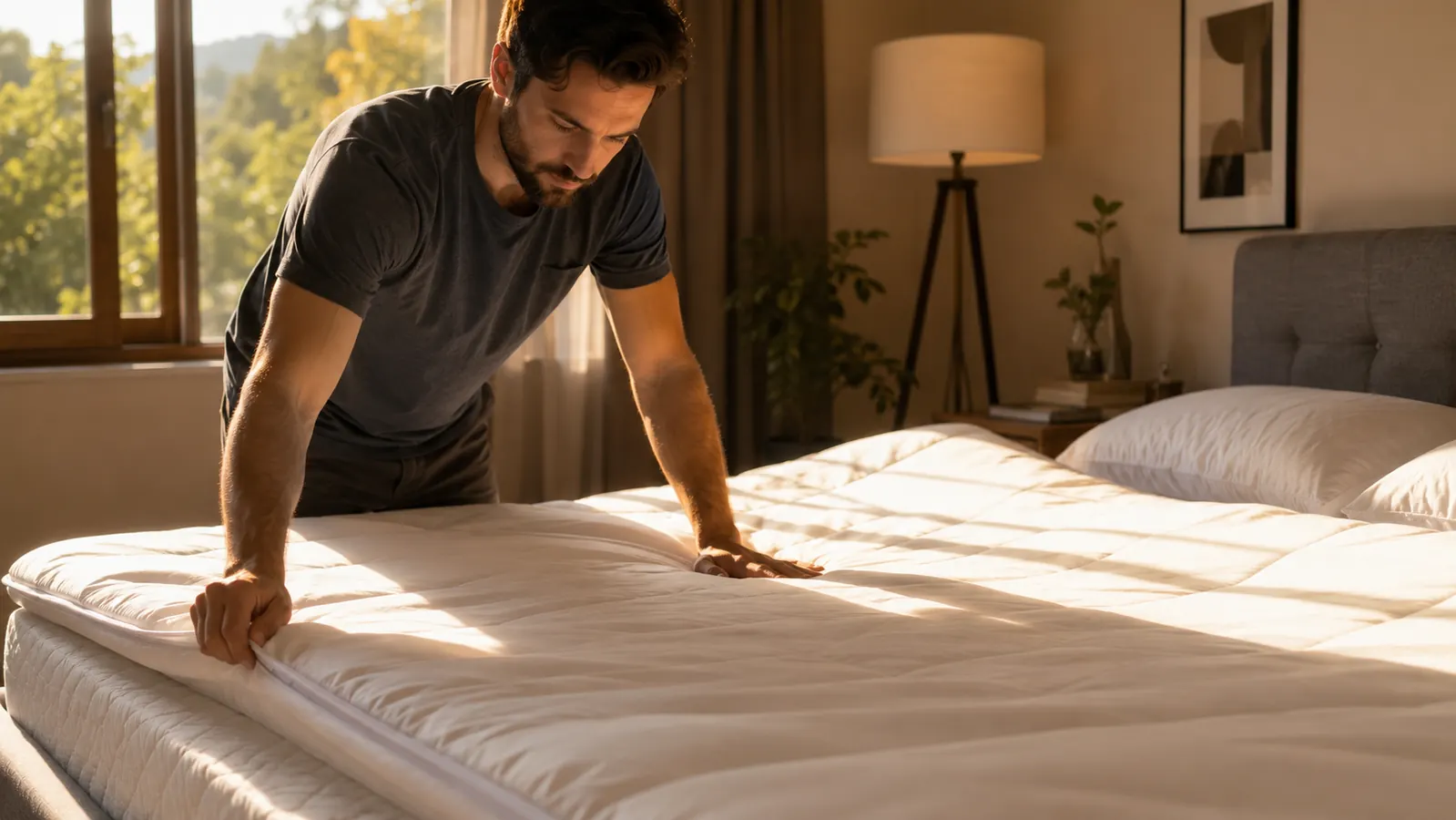
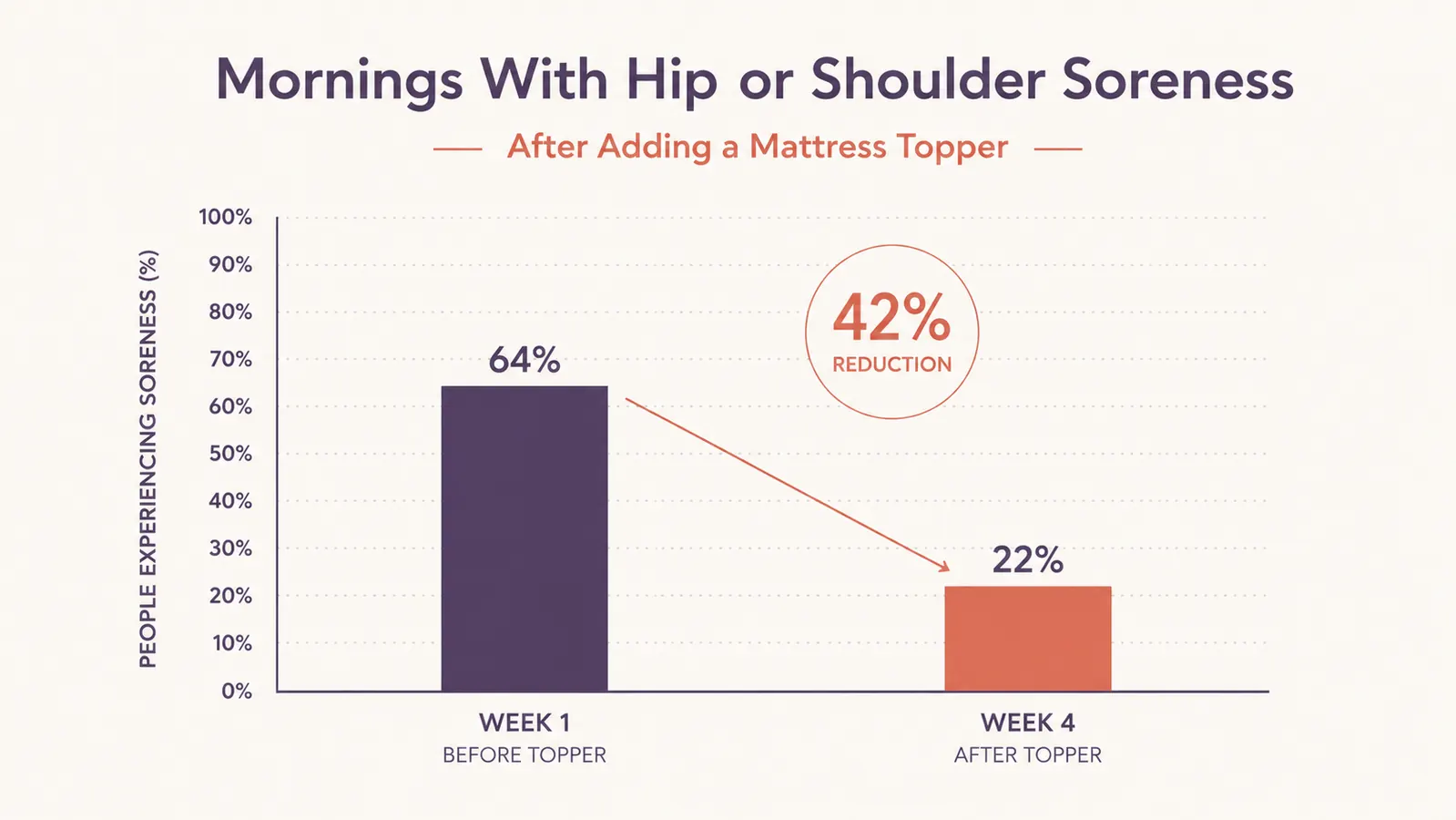
My mattress was eight years old before I admitted it out loud. There was a shallow dip on my side that hadn't been there in year three, and I was waking up with a dull ache across one hip most mornings, the kind that fades by noon but is still annoying every single day. I spent eleven years producing an overnight radio show, which meant sleeping from about 9am to 4pm instead of at night. My bedroom faces west on the second floor, so the afternoon sun comes straight through the window while I'm trying to sleep, and the street below runs full daytime traffic the whole time. A mattress that's already lost its support doesn't get any more forgiving just because you're sleeping on it during the day instead of at night.
I wasn't ready to replace the mattress itself, so I added the Linenspa 2 Inch Gel Memory Foam Topper instead. Here are ten specific reasons that decision worked, not vague ones. It took a full sleep cycle of daytime rest to notice most of them, but they're the reason an inexpensive topper did what I expected would take a whole new mattress to fix.
Before You Replace the Whole Mattress, Try This First
If the problem is a mattress that's lost its support, not one that was ever the wrong firmness, the Linenspa 2 Inch Gel Memory Foam Topper is worth understanding before you spend on a full replacement.
Amazon Check Today's Price on Amazon →It Restores Pressure Relief the Old Foam Already Gave Up
Every mattress has a comfort layer on top that does the actual pressure-relieving work, and that layer compresses over years of nightly use until it stops doing its job even though the mattress underneath still feels basically fine. The two inches of gel memory foam on the Linenspa sits right where that worn-out layer used to work, so it's giving your hips and shoulders back the give they lost rather than fighting a mattress that's already firm underneath.
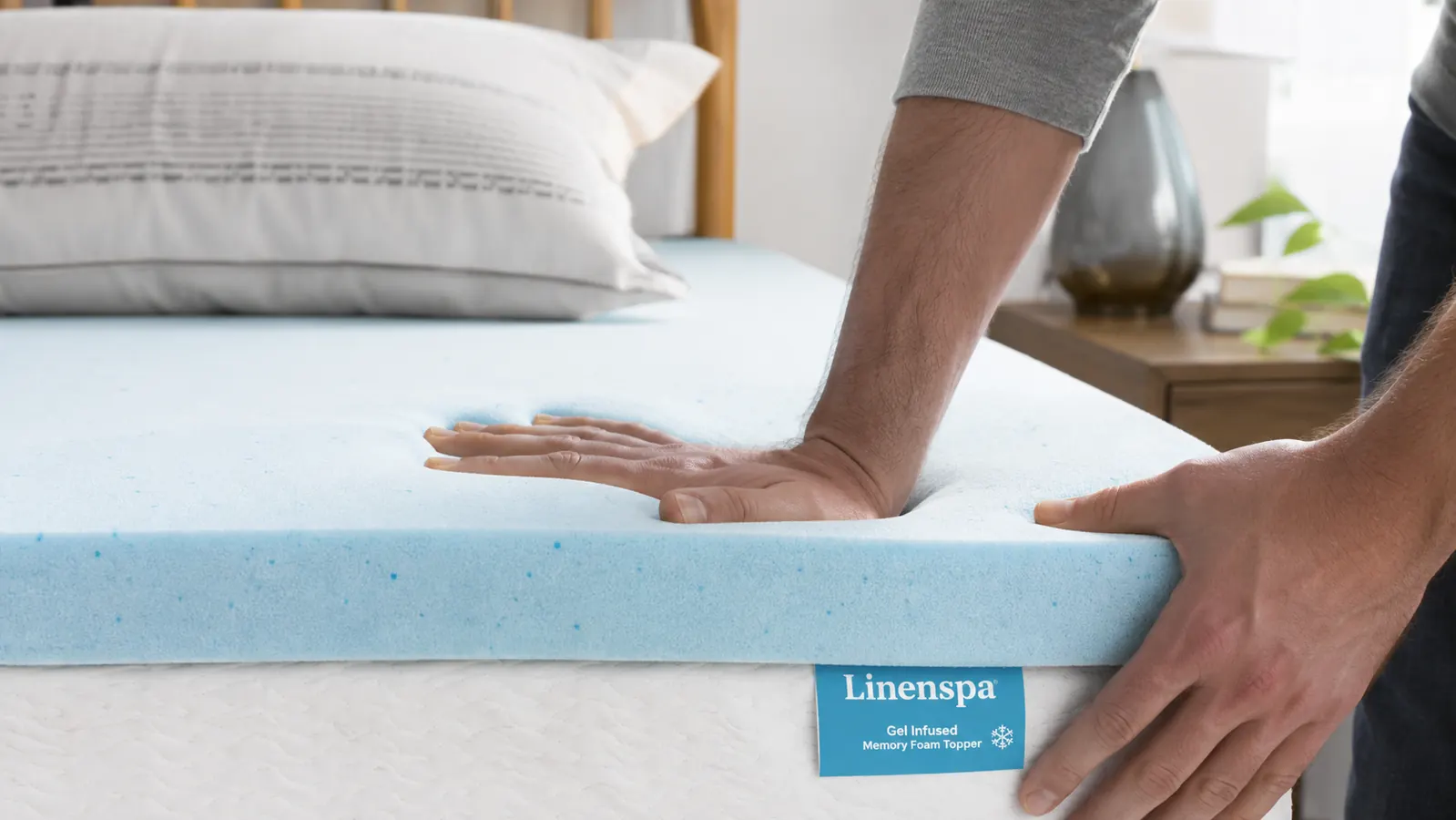
Gel Infusion Means It Doesn't Trap Heat the Way Old Memory Foam Does
Standard memory foam has a reputation for sleeping hot, and an older mattress with worn foam can actually make that worse since compressed foam holds body heat closer to the surface. The gel beads mixed into this topper pull heat away instead of holding it, which mattered more to me than I expected given I'm already fighting afternoon sun coming through a west-facing window while I'm trying to sleep. Adding foam without the gel infusion would have just made the overheating problem worse on top of an already warm room.
It Evens Out the Dip Where You've Slept for Years
A mattress doesn't wear evenly. It wears exactly where you sleep, which means there's usually a shallow trench on one side and barely any wear on the other. That unevenness is what makes an old mattress feel like it's rolling you toward the middle. Two inches of consistent foam laid over the top smooths that dip out from the surface you actually touch, even though the trench is technically still there underneath.
It Buys You Time Before a Full Replacement
Replacing a mattress is expensive and disruptive, and it's not always clear the mattress needs replacing versus needing help. A topper is the cheapest, lowest-commitment way to find out. If a topper fixes the soreness and the sagging feeling, you've saved yourself a mattress purchase entirely. If it doesn't, you've spent far less finding that out than you would have guessing your way through a new mattress.
It Softens a Mattress That's Gone Firmer With Age, Not Softer
It surprises people that an old mattress often gets firmer, not softer, because the top comfort foam compresses and thins while the firmer support layer underneath is what's left doing most of the work. That's a different problem than sagging, and it needs a different fix. I've written a full walkthrough on softening a mattress that's gone rock hard instead of saggy, which is the version of this problem I actually had first, months before the dip on my side ever showed up.
Two Inches Is Enough Loft to Change the Feel Without Changing Everything Else
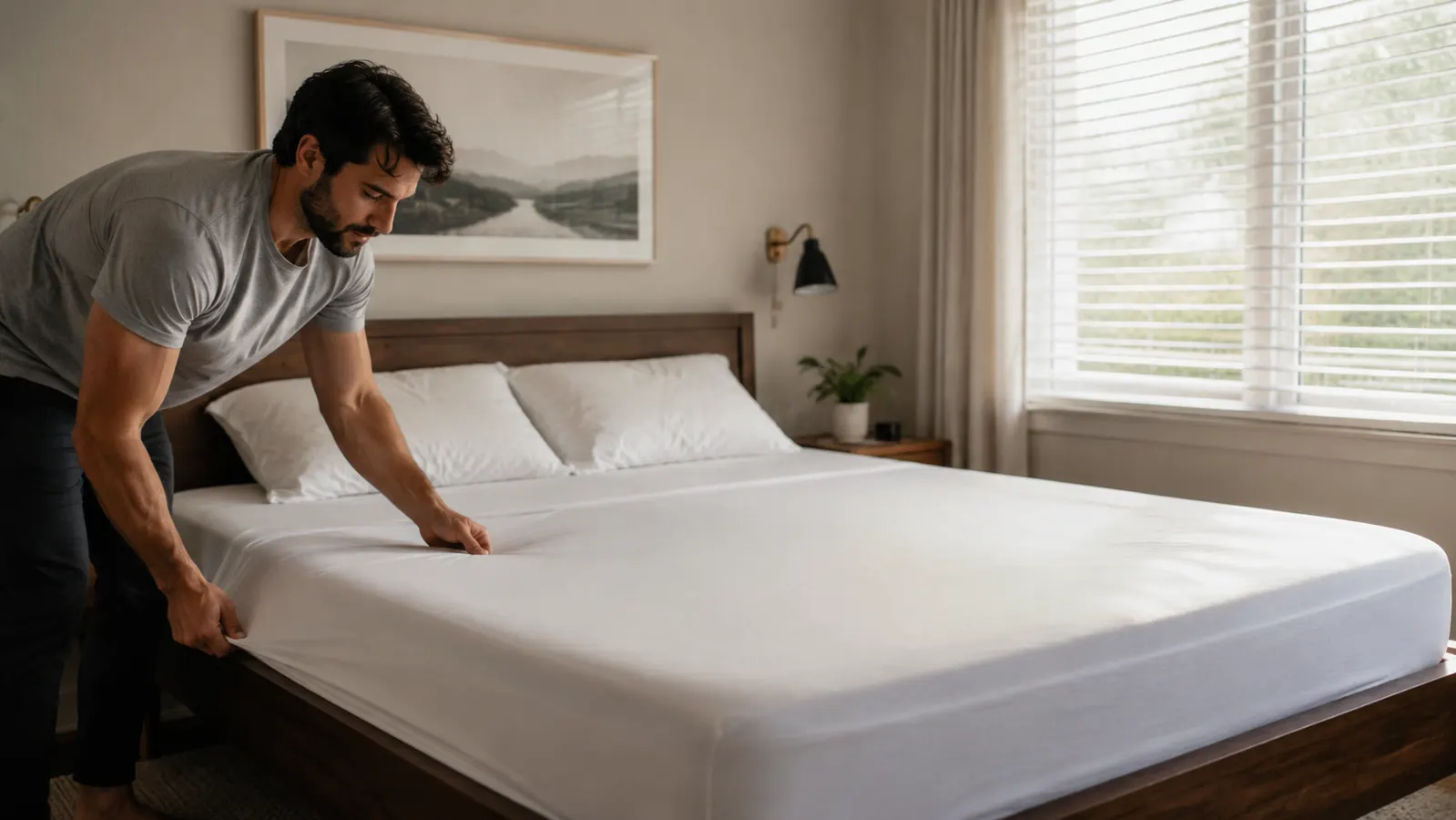
A topper that's too thin doesn't do much, and one that's too thick starts to feel like sleeping on a separate mattress balanced on top of your old one. Two inches is enough gel memory foam to actually change what your body feels first without turning your bed into something unrecognizable. It's worth knowing upfront that you'll likely need deep-pocket sheets to fit over the added height, a small adjustment for a fix that otherwise requires nothing structural.
It Doesn't Require Breaking Down or Disposing of the Old Mattress
Getting rid of a mattress is its own chore, hauling it out, finding a disposal service, or paying a delivery company to take the old one when the new one arrives. A topper skips all of that. The mattress that's causing the problem stays exactly where it is, and the fix just sits on top of it, which is a meaningfully lower-effort project than it sounds like at first.
It Works the Same Whether You Sleep at Night or Off-Schedule
It doesn't care that I'm sleeping at 9am with sun coming through a west-facing window and traffic running below on the street. The foam responds to pressure and body heat the same way regardless of the hour, because the mechanism is physical, not dependent on the room being dark or quiet. That consistency has mattered more to me on an overnight schedule than most sleep advice, which tends to assume you're sleeping at night in a dark room to begin with.
Nearly 75,000 Reviews Say It Holds Up, Not Just That It Feels Good on Day One
A topper can feel great out of the box and still flatten out within a few months, which is the actual failure mode that matters for an aging mattress. This one carries a 4.5-star average across roughly 74,600 reviews, which is a large enough sample that it's telling you something about durability over time, not just first impressions from people who never slept on it past the first week.
It Extends the Life of a Mattress You're Not Ready to Replace
Some mattresses have a few good years left in them if the support core is still sound and only the top comfort layer has given out. A topper is exactly the fix for that specific situation, and a poor one for a mattress whose support core has actually failed underneath. Knowing which one you have determines whether a topper is a real fix or a temporary patch. My full long-term review covers how it's held up after months of nightly use, including where it eventually started to show wear of its own.
What I'd Skip
A topper isn't a fix for a mattress with a broken support core, sagging springs, or a structural failure you can feel through the topper within a week. In that case you're just adding padding on top of a real problem, not solving it. It also won't fully rescue a mattress that's been actively damaging your back for years, that calls for a real replacement, not a patch. And if you run warm at night already, skip any topper without a cooling gel or fiber blend, since two inches of plain memory foam on an already firm mattress can trap more heat than it relieves.
An old mattress doesn't need to be replaced. Sometimes it just needs its top layer back.
Give Your Old Mattress Its Support Back Tonight
If the problem is a mattress that's sagging or gone firm with age, not one that was ever wrong for you, this is the cheaper, faster fix to try before you replace it.
Amazon Check Today's Price on Amazon →